OUR HISTORY
Our History
The history of Pickerel Narrows First Nation and The People of Granville Lake is the story
of a real community that remained real even when outside systems failed to treat it that way.
It is a story of place, family, continuity, disruption, and endurance.
IDENTITY
A Rocky Cree
Community
A Rocky Cree Community
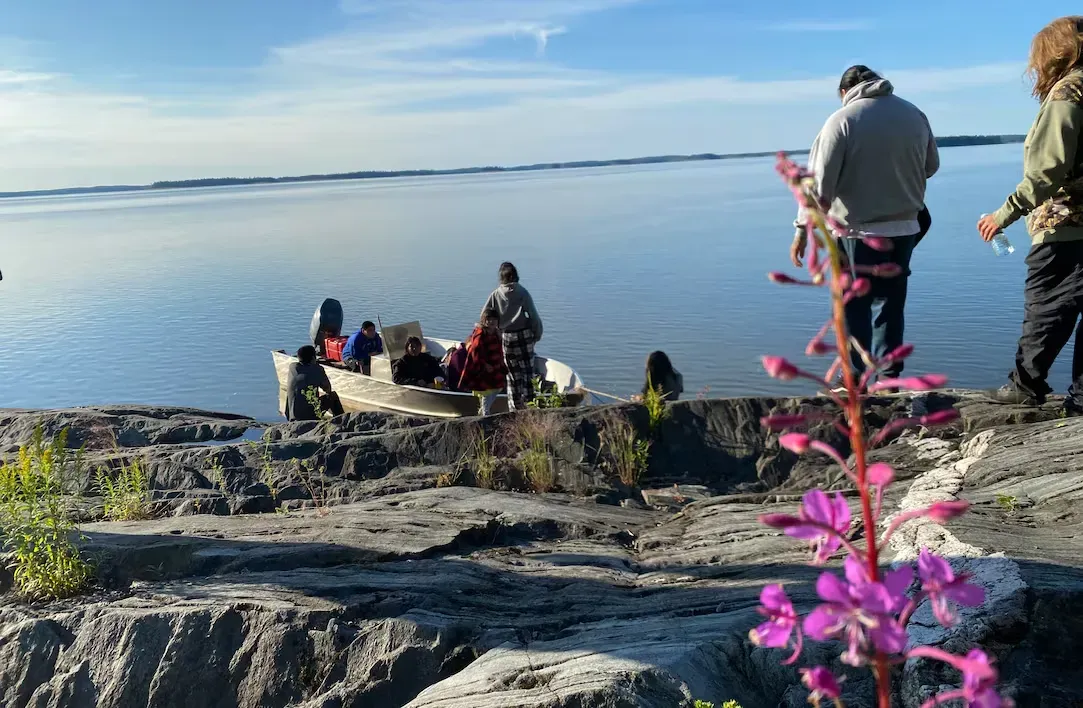
The People of Granville Lake are a Rocky Cree people. In Cree, Rocky Cree is expressed in our materials as Asinīskāwiyiniwak (ah-see-nee-skaw-wee-yih-nih-wak). That identity is not decorative. It is central to who the people are.
The community should be understood first through its own peoplehood, homeland, language, and continuity — not through later outside administration. Any truthful account of the community has to begin there.
This matters because one of the long-term harms done to Granville Lake was not only political. It was also interpretive. Others spoke about the community as though it could be folded into someone else’s story. The website should correct that by making identity clear from the start.
NAMES
Many Names, One Community
Like many Indigenous communities, Granville Lake has appeared under different names in different records. The historic name Granville House appears in the fur-trade record and is the earliest firm written colonial anchor now located for the area. Later government records use Granville Lake. Canada continues to carry the community as Granville Lake Indian Settlement No. 06457.
Today, the names that best reflect the community’s living identity are Pickerel Narrows First Nation and The People of Granville Lake. In Cree, the community is also identified as Okâwimithihkânâni (oh-KAW-ee-mee-thih-KAW-naw-nee), meaning Pickerel Narrows / Flowing Water Place.
The names changed in the paperwork. The people did not. This history of naming matters because it shows two things at once: first, that the community was known and carried in outside systems over time; and second, that those systems never had the power to define the people out of existence.
THE LAND
The Land and the People Were Already Here
The earliest written colonial records tied to the area include Granville House in the late eighteenth century. But those records did not create the community. They only show that by then, this place was already important enough to appear in outside systems.
The People of Granville Lake belong to a wider Rocky Cree world connected to the Churchill River Basin, while remaining rooted in Okâwimithihkânânim / Granville Lake as a home-place. Long before maps and government files existed, the people, the land, the water, and the routes were already here.
That matters because the history of the community should not be told as if it began when someone else finally wrote it down. The written record is only the first place colonial systems happened to notice a place that Indigenous people already knew well.
ADMINISTRATIVE OVERSIGHT
The Administrative Oversight That Was Never Corrected
A Rocky Cree Community
Around 1910 or 1911, Granville Lake was placed under the administrative authority of Mathias Colomb Cree Nation by the Crown. The community’s position is clear: that arrangement was administrative. It was not a lawful union, not a merger, and not a decision made by the people of Granville Lake.
The People of Granville Lake were never consulted. They never consented. They never voted to join MCCN, and they never merged with MCCN. What was imposed for Crown convenience was later treated as though it erased the community’s separate identity. It did not. That failure has carried forward for more than a century.
Why this matters is simple: when administration is mistaken for consent, a community can be pushed out of its own story. Its direct voice can be ignored. Its land base can be treated as negotiable by others. Its future can be delayed for generations. That is why the community continues to say clearly that administrative oversight was not joining, not merger, and not surrender.
"Administrative oversight is not consent."
WHY IT STILL MATTERS
Why That History Still Matters
This is not just an old paperwork issue.
When a real community is left without proper recognition, the consequences show up everywhere: in visibility, in representation, in planning, in confidence, in outside relationships, and in how future generations understand where they come from.
The current work is not about creating a new identity. It is about correcting a long-running administrative wrong and giving proper recognition to a community that has been here all along. It is also about making sure the next generation grows up with a clearer record, a clearer sense of belonging, and a stronger foundation than the one many of their parents and grandparents were forced to live through.
DISPLACEMENT
Displaced, Not Dissolved
The infrastructure crisis of 2002 and the 2003 evacuation changed the daily life of the community in serious ways. Families were forced out of the home community and into a Leaf Rapids-centered corridor. Houses, buildings, and infrastructure were left to deteriorate. The Province later delisted the community while federal systems still carried it on the books.
But the evacuation did not end the community.
The people remained. The families remained. The identity remained. The connection to Granville Lake remained. The People of Granville Lake were displaced, not dissolved.
That distinction matters because too many outside systems treat displacement as if it means disappearance. It does not. The people continued through kinship, memory, leadership, and determination, even while living through a long period of uncertainty and loss.
KEY EVENTS
A Timeline
18th c.
Granville House in the Historical Record
The earliest written colonial records tied to the area appear in the fur-trade record under the name Granville House. The community pre-dates all written documentation by generations.
1910- II
Administrative Oversight Imposed Without Consent
Around 1910 or 1911, Granville Lake was placed under the administrative authority of Mathias Colomb Cree Nation by the Crown — without consultation, consent, vote, or merger. The People of Granville Lake were never asked.
"Administrative oversight is not consent."
2002-03
Infrastructure Crisis and Evacuation
The infrastructure crisis of 2002 and the 2003 evacuation changed the daily life of the community in serious ways. Families were forced out and into a Leaf Rapids-centered corridor. The Province later delisted the community while federal systems still carried it on the books. But the evacuation did not end the community.
2025
Official First Nation "Band" Recognition Application Submitted
In 2025, an application for official First Nation "Band" Recognition was submitted to the Crown under the Indian Act, and is currently under review. The People of Granville Lake are not asking others to invent a new community — they are asking for the proper recognition of a community that already exists, has always existed, and has carried its identity forward across generations.
OFFICIAL FIRST NATION BAND RECOGNITION
Recognition Work Today
In 2025, an application for official band status was submitted to the Crown and is currently under review.
That process reflects something simple but important: the People of Granville Lake are not asking others to invent a new community for them. They are asking for the proper recognition of a community that already exists, has always existed, and has carried its identity forward across generations.
Recognition matters because it helps create the basis for direct representation, a future land base, stronger governance, and the ability to plan for housing, infrastructure, and long-term community rebuilding on the community’s own terms.
© Pickerel Narrows First Nation.

Okâwimithihkânâni · Asinīskāwiyiniwak · Granville Lake Indian Settlement No. 06457
NAVIGATE
Home
Our History
Current Activities
Future Initiatives
CONNECT
Community Registry
Support the Community
Ask a Question
Leadership
Contact
© Pickerel Narrows First Nation. Contact: Darrel Olson / Willow-ICS · [email protected] · 204-513-0083
An application for official band status is currently under review.